




In the grand story of human innovation, few technologies have offered as much promise — or provoked as much debate — as genomic engineering. It represents our growing ability to rewrite the code of life, altering DNA itself to cure diseases, enhance crops, and potentially reshape the future of evolution. At the heart of this revolution lies CRISPR-Cas9, a groundbreaking genetic editing tool that has made gene manipulation faster, cheaper, and more precise than ever before. Often described as “molecular scissors,” CRISPR allows scientists to cut, edit, or replace genes with surgical accuracy. Once a dream of science fiction, genomic engineering has become a practical reality — opening doors to curing genetic disorders, eradicating infectious diseases, and even engineering entire species. But with this immense power comes profound ethical and social responsibility.
Genomic Engineering
Genomic engineering is the deliberate modification of an organism’s genetic material — its DNA or RNA — to achieve desired traits or correct defects. Unlike traditional breeding or mutation-based approaches, genomic engineering operates directly at the molecular level, using sophisticated biotechnological tools.
It involves several methods:
- Gene Editing: Directly changing sequences of DNA (e.g., CRISPR, TALENs, ZFNs).
- Gene Insertion or Deletion: Adding new genes or silencing harmful ones.
- Synthetic Biology: Designing and constructing new genetic systems or organisms from scratch.
- Epigenetic Engineering: Modifying gene expression without changing DNA sequence.
Together, these techniques enable scientists to customize living systems — from bacteria to humans — with unprecedented control.
The CRISPR Revolution: A Simple but Powerful Tool
The true breakthrough in genomic engineering came in 2012, when scientists Jennifer Doudna and Emmanuelle Charpentier discovered a natural bacterial defense system called CRISPR-Cas9 and adapted it for gene editing.
CRISPR stands for Clustered Regularly Interspaced Short Palindromic Repeats, a DNA sequence pattern found in bacteria. These patterns store fragments of viral DNA, allowing bacteria to “remember” past infections. When the same virus attacks again, a Cas (CRISPR-associated) enzyme — typically Cas9 — uses these genetic “mugshots” to recognize and cut the viral DNA, neutralizing it.
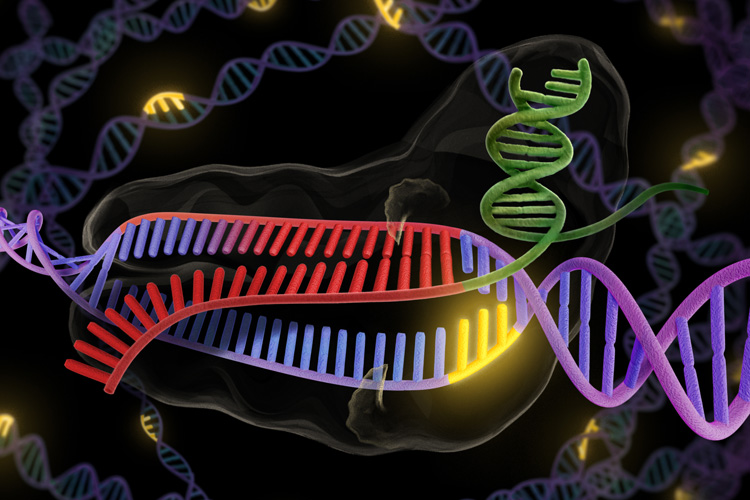
Scientists realized they could program CRISPR-Cas9 with a custom RNA guide (gRNA) to target any DNA sequence — effectively turning this bacterial immune system into a universal gene-editing tool.
How CRISPR-Cas9 Works
The CRISPR-Cas9 system has three essential components:
- Guide RNA (gRNA): A short synthetic RNA sequence that matches the target DNA.
- Cas9 Enzyme: Acts as molecular scissors, cutting the DNA at the target site.
- DNA Repair Mechanism: The cell’s natural repair process then fixes the break — either by joining the cut ends (disabling a gene) or incorporating new DNA provided by scientists (editing a gene).
This process allows for:
- Gene Knockout: Disabling or silencing a gene.
- Gene Correction: Replacing a faulty gene with a healthy one.
- Gene Insertion: Adding entirely new genetic material.
CRISPR’s simplicity, low cost, and precision have made it the most transformative gene-editing technology in history — often compared to the invention of the personal computer for biology.
Applications Across Science and Industry
The implications of CRISPR and genomic engineering stretch across medicine, agriculture, energy, and even ecology.
A. Medicine and Human Health
- Curing Genetic Diseases
CRISPR can correct mutations responsible for conditions like sickle cell anemia, muscular dystrophy, cystic fibrosis, and thalassemia.- In 2023, the first CRISPR-based therapy, Casgevy (exagamglogene autotemcel), was approved to treat sickle cell disease — a historic milestone for gene therapy.
- Cancer Treatment
Researchers are developing CRISPR-engineered immune cells that target and destroy tumors more effectively than conventional drugs. - Viral Resistance and Infectious Diseases
Scientists have used CRISPR to make cells resistant to HIV and to design diagnostics for COVID-19, like the SHERLOCK and DETECTR platforms. - Organ Transplantation
Gene editing may allow for xenotransplantation — modifying animal organs (like from pigs) so they can be safely transplanted into humans. - Personalized Medicine
With genomic profiling, CRISPR paves the way for treatments tailored to individual DNA — ushering in the age of precision medicine.
B. Agriculture and Food Security
CRISPR is reshaping how we grow food and breed animals:
- Drought-Resistant Crops: Editing genes to survive heat, salinity, and low water.
- Disease-Resistant Plants: Eliminating the need for pesticides by boosting natural immunity.
- Nutritional Enhancement: Rice enriched with vitamin A (“Golden Rice”) or wheat with higher protein.
- Livestock Engineering: Cows without horns (for safety) or pigs resistant to swine flu.
By making agriculture more sustainable and resilient, CRISPR could help feed a growing global population while reducing chemical use.
C. Biotechnology and Industry
CRISPR also accelerates research and industrial innovation:
- Synthetic Biology: Designing bacteria to produce fuels, plastics, or drugs.
- Drug Discovery: Editing genes in lab models to mimic human diseases.
- Bioenergy: Engineering algae to generate biofuels more efficiently.
- Environmental Cleanup: Editing microorganisms to break down pollutants or capture carbon.
D. Ecology and Conservation
One controversial but powerful use is gene drives, where CRISPR ensures certain genes spread rapidly through populations.
- For example, scientists have proposed using CRISPR to eradicate malaria by altering mosquito populations so they can’t transmit the parasite.
- It could also protect endangered species by restoring lost genetic diversity or eliminating invasive pests.
However, ecological applications carry serious risks — potentially altering entire ecosystems irreversibly.
Benefits of CRISPR and Genomic Engineering
- Precision: Ability to target specific DNA sequences.
- Efficiency: Faster and cheaper than older methods (e.g., ZFNs, TALENs).
- Versatility: Applicable to all living organisms.
- Accessibility: Affordable for small labs and startups, democratizing biotech innovation.
- Medical Potential: Offers hope for cures to thousands of previously untreatable genetic diseases.
Ethical, Legal, and Social Challenges
The ability to edit life raises deep moral questions — touching on the essence of humanity, nature, and ethics.
A. Germline Editing
Editing embryos or reproductive cells can permanently alter human heredity. In 2018, a Chinese scientist claimed to have created the first gene-edited babies, sparking international outrage and calls for regulation.
B. Inequality and “Genetic Enhancement”
Gene editing could widen social inequality if used for designer traits — intelligence, strength, or beauty — accessible only to the wealthy.
C. Unintended Consequences
Even minor off-target edits could cause cancer or unforeseen mutations. Long-term safety remains uncertain.
D. Biodiversity and Ecological Risk
Releasing genetically edited organisms could disrupt ecosystems or cause species extinction.
E. Regulation and Governance
Different nations have varying laws — from open research (U.S., U.K.) to strict bans (Germany, France). A global framework for ethical oversight remains a major challenge.
The Expanding Toolkit
CRISPR technology continues to evolve, producing new variants with enhanced abilities:
- Cas12 and Cas13: Target RNA instead of DNA — useful for diagnostics and antiviral therapies.
- Base Editing: Changes a single “letter” of DNA without cutting the strand, reducing side effects.
- Prime Editing: A “search and replace” version of CRISPR that can perform precise edits without double-strand breaks.
- CRISPRa / CRISPRi: Activate or suppress genes instead of cutting them — useful for gene regulation studies.
These advances make CRISPR not just a tool for editing genes, but a platform for rewriting biology itself.
The Future of Genomic Engineering
Over the next decades, genomic engineering will redefine medicine, agriculture, and even human identity.
Key trends include:
- CRISPR Therapies at Scale: Dozens of clinical trials for inherited disorders, cancer, and infections.
- Human Genome Optimization: Ethical but cautious exploration of preventing hereditary diseases before birth.
- AI Integration: Using artificial intelligence to design optimal edits and predict biological outcomes.
- Portable CRISPR Kits: Low-cost, field-ready devices for diagnostics and research.
- Global Collaboration: Efforts to build shared ethical and safety frameworks through organizations like WHO and UNESCO.