




Imagine a world where a car engine, a prosthetic arm, a house, or even a human organ can be printed on demand — not assembled from parts, but created layer by layer from digital blueprints. This is the reality brought to life by 3D printing, also known as Additive Manufacturing (AM) — one of the most transformative technologies of the modern era. Unlike traditional subtractive manufacturing (which cuts or carves material away), additive manufacturing builds objects from the ground up, depositing material precisely where needed. The result is less waste, greater customization, faster production, and nearly unlimited design freedom. From aerospace and medicine to fashion and food, 3D printing is changing how we design, produce, and even think about the material world.
3D Printing.
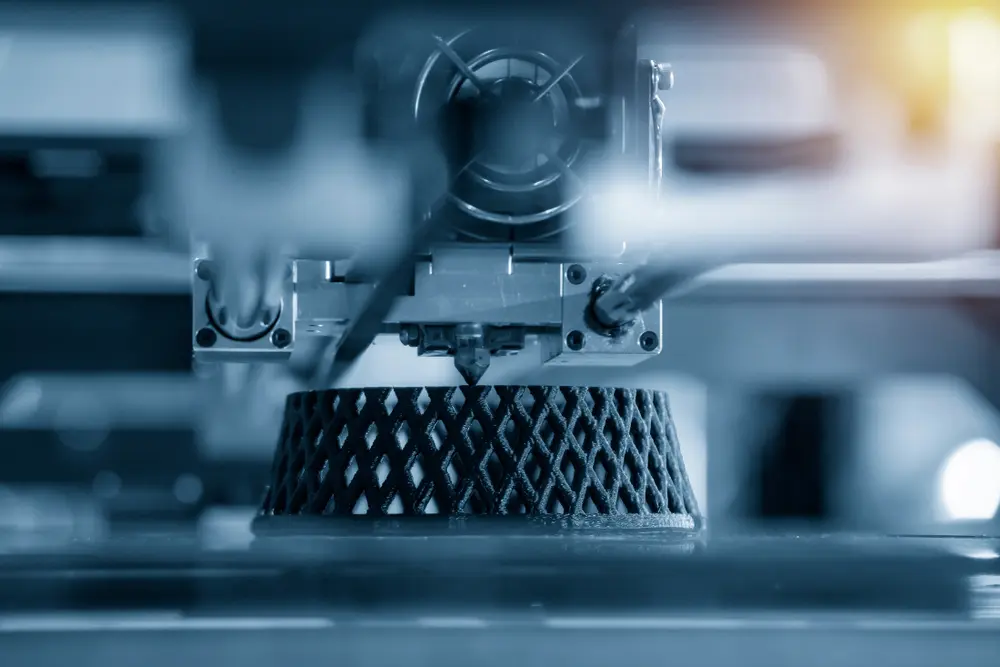
3D Printing refers to the process of creating three-dimensional objects from a digital model by successively layering materials such as plastic, metal, resin, or even biological cells.
The process typically involves three key steps:
- Design: A 3D model is created using CAD (Computer-Aided Design) software or scanned from a real object.
- Slicing: The design is digitally sliced into thin horizontal layers.
- Printing: The printer deposits material layer by layer until the full object is formed.
A Brief History
Though it feels futuristic, 3D printing has roots stretching back to the 1980s:
- 1983: Chuck Hull invented stereolithography (SLA) — the first 3D printing process using light to harden liquid resin.
- 1990s: Technologies like FDM (Fused Deposition Modeling) and SLS (Selective Laser Sintering) emerged.
- 2000s: 3D printing entered commercial and consumer markets, powering rapid prototyping.
- 2010s–2020s: The technology matured — moving from prototyping to full-scale production, architecture, and even bioprinting.
How Does It Work.
Although many methods exist, the basic principle of 3D printing remains consistent: an object is built layer by layer under computer control. Let’s explore the major techniques.
A. Fused Deposition Modeling (FDM)
- The most common and affordable method.
- A heated nozzle extrudes thermoplastic filament (like ABS or PLA) in layers.
- Used for prototyping, education, and hobbyist printing.
B. Stereolithography (SLA)
- Uses ultraviolet lasers to cure photosensitive liquid resin.
- Produces high-resolution, smooth, and detailed parts — perfect for jewelry, dentistry, and prototypes.
C. Selective Laser Sintering (SLS)
- A laser fuses powdered material (nylon, metal, or ceramic) into solid layers.
- Enables strong, functional parts with intricate designs.
D. Direct Metal Laser Sintering (DMLS) / Electron Beam Melting (EBM)
- Advanced forms of metal 3D printing used in aerospace and automotive industries.
- Capable of producing parts from titanium, aluminum, and stainless steel.
E. Binder Jetting
- A liquid binder glues together powder layers, later hardened by heating.
- Used for sand molds, ceramics, and full-color prototypes.
F. Bioprinting
- Specialized printers deposit living cells and biopolymers to create tissues or organs.
- One of the most promising frontiers in regenerative medicine.
Materials Used in 3D Printing
Modern 3D printing supports a wide range of materials:
- Plastics: PLA, ABS, PETG, Nylon — versatile and affordable.
- Metals: Titanium, aluminum, steel, cobalt-chrome — used in aerospace and implants.
- Resins: High-detail photopolymers for dental, jewelry, and visual prototypes.
- Ceramics: Used in art, heat-resistant components, and medical devices.
- Composites: Carbon-fiber and glass-filled polymers for enhanced strength.
- Bio-inks: Gel-like substances containing living cells for medical research.
Key Advantages of 3D Printing
A. Design Freedom
Complex geometries, organic shapes, and lightweight lattice structures are easily achieved — things impossible with traditional molds or machining.
B. Customization
Each product can be tailored individually without extra cost — perfect for prosthetics, dental implants, and fashion design.
C. Rapid Prototyping
Designers can print and test concepts in hours, drastically shortening product development cycles.
D. Reduced Waste
Additive processes use only the material required for the object, minimizing scrap and environmental impact.
E. Decentralized Manufacturing
Products can be printed locally or on-site, reducing supply chain dependency and shipping costs — a huge advantage in emergencies or remote regions.
Real-World Applications
Aerospace and Automotive
Companies like Boeing, Airbus, and SpaceX use 3D-printed titanium and Inconel parts for weight reduction and fuel efficiency.
- GE’s LEAP jet engine includes 3D-printed fuel nozzles 25% lighter and five times more durable.
- Automakers print prototypes, molds, and even entire car frames (e.g., Local Motors’ 3D-printed car “Strati”).
Medical and Healthcare
- Custom Prosthetics: Affordable, patient-specific limbs designed with precision.
- Dental Crowns and Aligners: Printed with extreme accuracy.
- Surgical Models: Used for planning complex operations.
- Bioprinting: Researchers are printing tissues, bones, and even liver cells — a step toward organ fabrication.
Construction and Architecture
Large-scale 3D printers now build houses and bridges using cement-like materials.
- Companies like ICON and Apis Cor print homes in under 24 hours, reducing costs and waste.
- Disaster relief projects use mobile printers to provide rapid housing solutions.
Fashion and Art
Designers print custom jewelry, footwear, and haute couture pieces with intricate patterns and zero waste. Adidas’ 3D-printed “Futurecraft” soles are now mass-produced.
Food and Culinary
Food printers extrude pastes (chocolate, dough, meat proteins) into edible designs. NASA even tested 3D-printed pizza for space missions!
Manufacturing and Tooling
Factories use 3D printing to create custom jigs, molds, and replacement parts on demand, improving efficiency and reducing downtime.
Economic and Industrial Impact
The global 3D printing market exceeded $20 billion in 2024 and is projected to reach $80 billion by 2030.
Industries benefit through:
- Shorter Supply Chains: Printing locally reduces dependency on overseas suppliers.
- Mass Customization: Perfect for medical, fashion, and consumer goods sectors.
- On-Demand Manufacturing: Parts produced only when needed reduce inventory costs.
Moreover, 3D printing aligns perfectly with sustainability goals, reducing transportation emissions, waste, and overproduction.
Challenges and Limitations
Despite its transformative potential, 3D printing faces several challenges:
A. Speed and Scalability
Printing large objects can take hours or days — slower than traditional mass production.
B. Material Constraints
Not all materials are printable, and properties (like strength or temperature resistance) can vary.
C. Cost of Industrial Equipment
High-end printers and materials can be expensive, limiting accessibility for small businesses.
D. Quality Control
Ensuring consistent quality and certification for safety-critical parts (like aircraft components) remains complex.
E. Intellectual Property (IP) Concerns
Digital blueprints can be easily copied or pirated, raising copyright and security issues.
The Future of 3D Printing
The next decade will bring an explosion of innovation in additive manufacturing:
- 4D Printing: Smart materials that change shape over time or in response to stimuli (e.g., heat, water).
- Hybrid Manufacturing: Combining 3D printing with CNC machining for precision and strength.
- AI-Driven Design: Generative algorithms optimizing geometry for performance and sustainability.
- Bioprinted Organs: Custom tissues, bones, and organs for transplantation.
- Space Manufacturing: NASA and ESA already use 3D printers on the ISS to create tools and spare parts.